


- Japan produces many green teas: sencha, genmaicha, houjicha, gyokuro, and matcha.
- Each has its own production method and profile: from vegetal sencha to roasted houjicha.
- Gyokuro and matcha are shade-grown teas, rich in umami and theine.
- Matcha stands out: the whole leaf is ground and ingested, with up to 137 times more antioxidants.
- For aromatic richness and health benefits, matcha stands out as an exceptional green tea.


In Japan, there are different varieties of green teas and production methods, often little known in the West.
You'll also learn more about my favorite tea: matcha.
Sencha, Japan's famous green tea
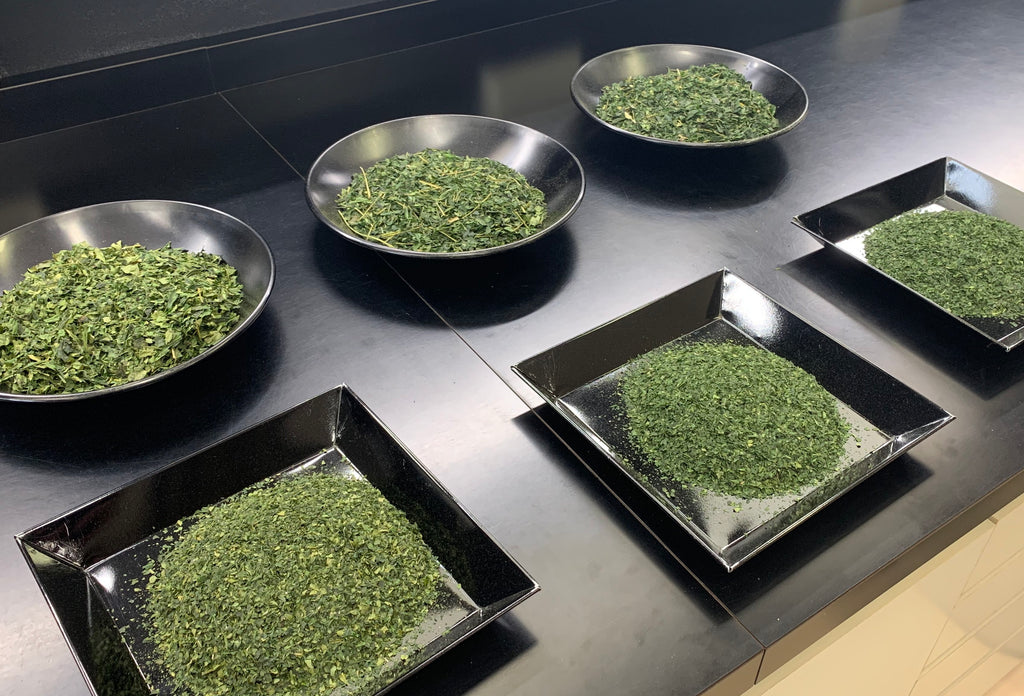
Sencha (煎茶), or "infused tea," is the most common tea in Japan. It accounts for about 70% of the country's tea production.
It is a tea with a slight bitterness, featuring vegetal and marine notes reminiscent of seaweed.
Invented in the 17th century by Nagatani Soen, the sencha production method is unique to this tea: to stop the leaves from oxidizing (this is what differentiates black tea from green tea), it is steamed for several seconds right after harvest, before being cooled, rolled, and then dried.
This is what is known as the aracha (荒茶) production process, or "raw tea."
This raw tea then undergoes a finishing process, called shiage (仕上げ):
- a cutting and sorting phase,
- a final drying, called hiire (火入れ),
- before being (sometimes) blended with other cultivars or grades of tea leaves.
Sencha is recognizable by its long, thin green leaves, which produce a characteristic yellow-green infusion.
Genmaicha, the rice tea
Genmaicha (玄米茶), or "brown rice tea," is a green tea in which common green tea (bancha) or sencha is mixed with roasted rice grains.
Also called "popcorn tea" because of the rice grains that can sometimes pop, this umami-flavored tea offers deliciously indulgent roasted and malty notes, along with the typical vegetal freshness of Japanese green teas. The infusion takes on a fairly light color, leaning yellow-green.
Houjicha, the roasted tea
Houjicha (ほうじ茶), or "roasted tea," is a green tea that stands out easily from traditional Japanese teas due to the roasting process it undergoes. Once roasted, houjicha tea leaves take on a lovely brown color, which is also found in the infusion.
Low in caffeine, it is a tea highly appreciated by the Japanese, who often drink it in the evening.
It is a mild tea, with a sweet flavor and roasted, hazelnut notes.
Lately, it is increasingly found in the form of a houjicha latte, that is, mixed with frothed milk. An excellent substitute for hot chocolate in winter!

Gyokuro, the king of Japanese green teas

Among the most prestigious green teas is gyokuro tea (玉露), or "dew pearl."
It is a shade-grown green tea, meaning it grows away from sunlight during the weeks preceding harvest, using black nets.
Thanks to this method, the tea leaves gain in chlorophyll and theine concentration. Gyokuro is a steamed green tea: it also undergoes the same aracha and shiage production processes as sencha.
The result is a tea rich in umami, with vegetal, briny, and vegetable broth notes.
As gyokuro is a high-quality tea, it is reserved for special occasions or the most dedicated enthusiasts, being very delicate and more difficult to prepare than other teas.
147 personnes bought a Kumiko Matcha this month after reading this article.
Matcha, Japan's jade green powder
This is probably the Japanese tea that has gained the most popularity worldwide in recent years: matcha tea (抹茶).
A shade-grown green tea ground into a fine powder using stone mills, matcha is a tea traditionally served during the Japanese tea ceremony, Chanoyu (茶の湯, hot water for tea).
Good-quality matcha powder has a characteristic vibrant green color, and offers a deliciously umami taste, a creamy liquor, with fresh, herbaceous vegetal aromas.
The benefits of matcha green tea are numerous, including:
- a high concentration of antioxidants: up to 137 times more than in an infused tea!
- support for improved focus and mood;
- support in slowing neurodegenerative diseases;
- support for weight loss as part of a healthy diet and lifestyle.
Like gyokuro, matcha is covered with black nets several weeks before harvest to increase its chlorophyll and theine content. But unlike other Japanese teas, it is not rolled: the result is tencha tea.
Once de-veined and dried, the tencha leaves are ground to produce the famous matcha tea powder.
Looking for a quality matcha? Take the time to discover our organic matcha teas available to buy online and find the one that suits you.
That's why I'm happy to share with you exceptional matchas from unique cultivars (single-cultivar) and a unique region (single-origin), including our community's favorite matcha: organic Saemidori! Grown in Japan, in the Kagoshima region, on the island of Kyushu, it is non-bitter, with notes of cocoa and fresh herbs, and offers a pleasant, captivating, and comforting sensation.

Pure Saemidori cultivar — the excellence of Japanese ceremonial grade
Perfect balance of flavors — powerful umami, floral sweetness, zero bitterness
Concentrated benefits — L-theanine (focus & serenity) + natural antioxidants
Certified organic JP-organic-005
Suitable for all your rituals — from traditional ceremony to modern latte

30-Day Quality Guarantee
We are so confident that you will love Matcha KUMIKO that we offer a 30-day money-back guarantee. Simply return your unopened box within 30 days for a full refund.

Find your ideal matcha 🍵
Browse our selection and find exactly what you need.

Quiz · 60 sec
Quel thé vert japonais est fait pour vous ?
4 questions, 60 seconds — tested and approved by 3000+ drinkers.
Start the quiz

Quiz · 60 sec
Quel thé vert japonais est fait pour vous ?
4 questions, 60 seconds — tested and approved by 3000+ drinkers.
Start the quizWhat are the best Japanese green teas?
We have reviewed the best-known types of Japanese teas, as well as their particularities.
While hojicha and genmaicha can be drunk at any time of day, matcha and gyokuro are better suited to the early part of the day due to their high caffeine content.
Matcha in particular is a good substitute for morning coffee, providing energy that is more diffused over time, due to the combination of L-theanine and the caffeine molecule. In doing so, it helps avoid the crash that follows coffee's energy spike.
In a more recent article, we also showed that matcha, unlike coffee, would not increase the risk of cardiac death in people suffering from hypertension.
Ultimately, what matters is choosing a tea that suits you, and that fits the time of your tea break in your day.


