


Indeed, the high flavonoid contents in our premium matcha green tea with free delivery make it an ideal drink for wellbeing.
Indeed, the high flavonoid contents in matcha green tea powder make it one of the leading superfoods.
Thanks to this important source of antioxidants, matcha contributes to the anti-inflammatory and antiviral action of our diet in the body.
Moreover, researchers have supported the conclusions of previous studies that still needed further clarification.
In a study published in April 2020 in The American Journal of Clinical Nutrition, researchers confirm that high consumption of berries, apples, and green tea may have protective benefits against Alzheimer's disease.
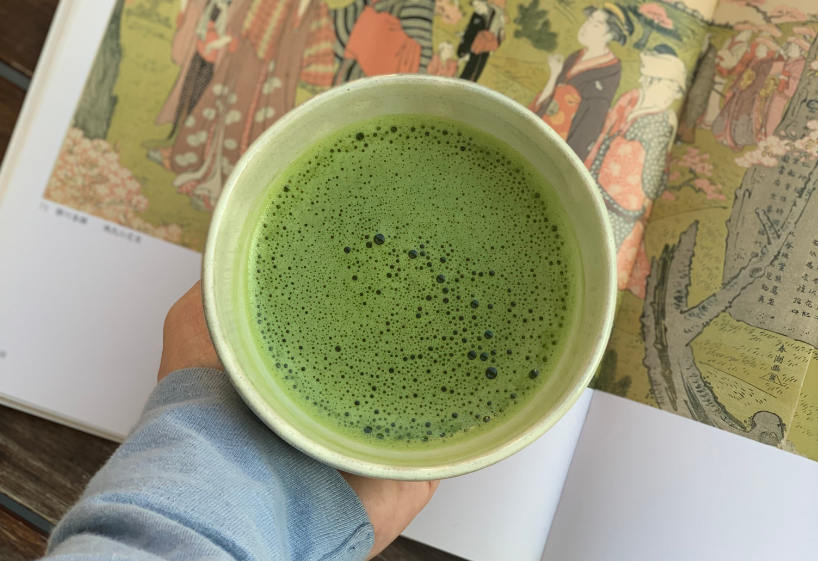
Matcha helps slow neurodegenerative diseases.
According to researchers, higher long-term dietary intake of flavonoids is associated with lower risks of Alzheimer's disease and dementia.
Indeed, they explain that "older adults who consumed small quantities of flavonoid-rich foods, such as berries, apples, and tea, were two to four times more likely to develop Alzheimer's disease and related dementias over 20 years compared to those with higher intake."
This epidemiological study, based on several thousand people aged 50 and over, examined the long-term relationship between the consumption of foods containing flavonoids and the risk of Alzheimer's disease and related dementias.
On the other hand, many studies have examined the associations between nutrition and dementia, but over short periods of time. This latest large-scale study examined flavonoid exposure over 20 years.
Flavonoids are natural substances found in plants. They are found in fruits and vegetables such as pears, apples, berries, onions, and plant-based beverages such as tea and wine.
It should also be noted for food lovers that dark chocolate (minimum 70%) is another important source of flavonoids.
Flavonoids are associated with various health benefits, including reduced inflammation.
As a result, the research team determined that a low intake of three types of flavonoids was linked to a higher risk of dementia compared to the highest intake.
More specifically, we note that: low consumption of flavonols (apples, pears, and tea) was associated with a twofold increase in the risk of developing Alzheimer's disease and related dementias; low consumption of anthocyanins (natural pigments found in blueberries, strawberries, and red wine) was associated with a fourfold increase in the risk of developing Alzheimer's disease and related dementias; low consumption of flavonoid polymers (apples, pears, and tea) was associated with a twofold increase in risk.

Diet and cognitive decline
This study provides insight into how diet over time may be linked to cognitive decline in individuals.
Indeed, the authors were able to examine flavonoid intake for many years prior to the participants' dementia diagnosis.
With no effective drugs currently available to treat Alzheimer's disease, preventing the disease through a healthy diet is an important consideration.
The researchers analysed six types of flavonoids. They compared long-term absorption levels with the number of diagnoses of Alzheimer's disease and related dementias later in life.
They found that low intake of three types of flavonoids was linked to a higher risk of dementia compared to the highest intake.
In this study, a high intake was equal to approximately 7.5 cups of blueberries or strawberries (anthocyanins) per month, 8 apples and pears per month (flavonols), and 19 cups of tea per month (flavonoid polymers). This qualitative intake can help you reorganize your diet in healthy ways, preferably including seasonal and organic foods.
Finally, the authors point out that "tea, especially green tea, and berries are good sources of flavonoids, and it doesn't take much to improve levels. One cup of tea a day or a few berries two or three times a week would suffice."
The approximate age at which the data was first analysed for participants (average age of 50) is not too late to make positive dietary changes. The risk of dementia really starts to increase from the age of 70.
To conclude, the message to remember is that when you approach your fifties, you should start thinking about a healthier diet if you haven't already done so, and include matcha green tea.
Discover our blog items on the benefits of matcha:
- What are the benefits of matcha tea?
- The benefits of matcha for hair
- The benefits of matcha for the skin
- Matcha and digestion: a natural ally
- Matcha flavonoids and cognitive decline
- Matcha catechins and their benefits
- L-theanine: an asset of matcha for relaxation
Text/Photos: Jimmy Braun/BNS - July 2020
Sources
Long-term dietary flavonoid intake and risk of Alzheimer disease and related dementias in the Framingham Offspring Cohort. The American Journal of Clinical Nutrition, 2020; DOI: 10.1093/ajcn/nqaa079, https://academic.oup.com/ajcn/article/doi/10.1093/ajcn/nqaa079/5823790
Flavonoids green tea against oxidant stress and inflammation with related human diseases. Clinical Nutrition Experimental, Volume 24, April 2019, Pages 1-14 ; https://doi.org/10.1016/j.yclnex.2018.12.004


