




In this article, I'll share with you the definitions of several terms used in the world of matcha tea. I'll draw a parallel with wine and champagne, as they have a lot in common with tea.
You probably know wine grape variety names like chardonnay, merlot, or even cabernet sauvignon. Did you know the same exists for tea?
These "tea grape varieties" are called cultivars.
What is the definition of a cultivar?
The word cultivar in agriculture, or horticultural variety
In botany, a "cultivar" is a cultivated plant variety obtained through selection, based on aesthetic criteria, growth, adaptation to an environment, or resistance to diseases.
The word "cépage" (grape variety), used specifically in the world of wine, is a synonym of the word "cultivar".
What is a matcha tea cultivar?
A cultivar is a group of tea plants obtained through selection and crossbreeding, which are grown for their particular characteristics.
Indeed, each cultivar is more or less suited to certain weather conditions (frost-resistant, for example) or is grown for its unique flavor, color, or aroma. Some cultivars are particularly well suited to producing matcha tea.
To preserve the qualities of the cultivar and prevent it from changing over time, Japanese tea is most often grown using cuttings instead of seeds. In other words, most tea fields are filled with clones of the same tea plant, and they all have exactly the same genetic heritage.

Three cultivars: Yabukita, Saeakari and Asatsuyu (from left to right)
The example of Yabukita

Deep green leaves ready to be harvested
In 1908, a farmer named Sugiyama Hikosaburo (杉山彦三郎) developed a new cultivar in the Shizuoka region.
He named it Yabukita, which literally means thicket (藪) of the north (北), as his field was located north of a bamboo grove.
This cultivar is particularly robust and cold-resistant, can survive in a wide range of climates, and has a pronounced flavor.
Yabukita was registered as an official cultivar in 1954, and spread widely throughout Japan. Today, it is the most popular tea: it accounts for 75% of Japanese tea according to Japan's Ministry of Agriculture, Forestry and Fisheries.
It is practically omnipresent in matcha production.
The downside of Yabukita is that it is vulnerable to insect pests and diseases, and requires a great deal of care.
Other cultivars?

There are very many cultivars (more than a hundred), far less well known than Yabukita, with varied taste profiles. Here are other cultivar names: Samidori, Asahi, Komakage, and Yamakai. There are also hybrid cultivars, meaning crosses between two cultivars, such as Tsuyuhikari.
Knowing them brings an extra dimension to tea tasting and understanding, on top of the type of tea, the farmers and the terroirs.
Cultivars offer several advantages:
- they offer a wide variety of tastes and aromas, providing plenty of choices and possible delights when tasting
- the farmer can choose a cultivar suited to the climate and conditions of their terroir
- they have more stable quality and a better yield than zairai
The special case of zairai

Tokuya-san's tea fields in the Kyoto region
The use of cultivars is relatively recent in the history of tea in Japan; it only became common from the 1960s and 70s.
Before this boom, tea was grown from seeds. Today, only a handful of tea gardens still use this method (about 3%). These native tea varieties, which do not belong to any distinctive cultivar, are called zairai (在来).
In this case, each plant has a unique and different genetic makeup: a field of zairai is like a large natural blend of hundreds of unique plants.
Zairai are no longer very popular with most farmers for several reasons:
- they are not as profitable as cultivars because their yield is unpredictable
- since they are all genetically different, the harvest timing and taste of every tea plant will differ, even within the same tea garden. This makes the work harder for farmers during harvests
But zairai also have undeniable advantages:
- zairai have better resistance to diseases and insect pests thanks to their diversity and their adaptation to their native terroir
- many consider the rare flavor of zairai to be that of Japanese tea of old
That's why I'm so happy to work with our partner farmer Tokuya-san and his natural zairai matcha, which is a true rarity and a unique pleasure.
Blends
A blend is a combination of teas mixed in certain proportions to give it a particular taste effect. These proportions are generally adjusted every year according to the quality of the different batches of tea available.
The characteristics of blends
Click the play button to see my explanation of tea selection (3min38)
In this video, I show you the room where the tea sommelier blends the organic premium matcha tea.
The work of the tea master is comparable to that of the cellar master in the world of champagne.
Organic premium matcha tea is the product of a blend, like most champagnes: it has no vintage and always keeps the same taste no matter the year, thanks to the tea master's blending work.
This specialist will taste the different tencha harvests and evaluate them based on their terroir, cultivar, color, aroma and nose. He will create a blend, a "mix", of these tencha coming from the cooperative of several farmers, to arrive at a finished product like our organic premium matcha tea.
My selection of blends

organic premium matcha tea from Japan
The flagship product of Kumiko Matcha, it's the very best organic premium matcha tea.
A delicate powder with an intense jade color.
A rich, mellow mouthfeel with a delicious flavor. Initially vegetal and herbal, slightly astringent with a tannic sensation followed by a smooth finish. Full of umami.
Grown using organic farming methods to respect the environment and deliver all the benefits of the plant.

An unbelievable grand cru, the very definition of umami, the most luxurious and exclusive, for special occasions.
Nishi-san chose to keep his blend formula secret, but he kindly revealed to us that the most prominent cultivar is Saemidori.
This tea variety, with its pronounced umami taste, is generally ready to be harvested earlier than Yabukita. Its leaves are a very bright and glossy green.
Single origin
A single origin tea (single origin) comes from a single tea garden, or a single terroir. This term is most often used together with the term "single cultivar" to mean the opposite of a blend: a matcha that comes from a single terroir and a single cultivar or variety.
The appeal of single origin is that you can find the characteristics of a cultivar you love, or taste matcha tea as it used to be if it is a zairai cultivar.
My single origin selection
the vintage & terroir matcha - Nakai 2019
Nakai-san is a small producer with a very powerful story.
Still evolving, the 2019 vintage offers a delicious taste, aroma, and scent, with a clear note of traditional craftsmanship. Softer, more "matcha" and less and less "sencha" as it was in 2016.
It is a delight and a pleasure to experience the evolution of this tea, and to benefit from Nakai-san's passion and love for his craft.
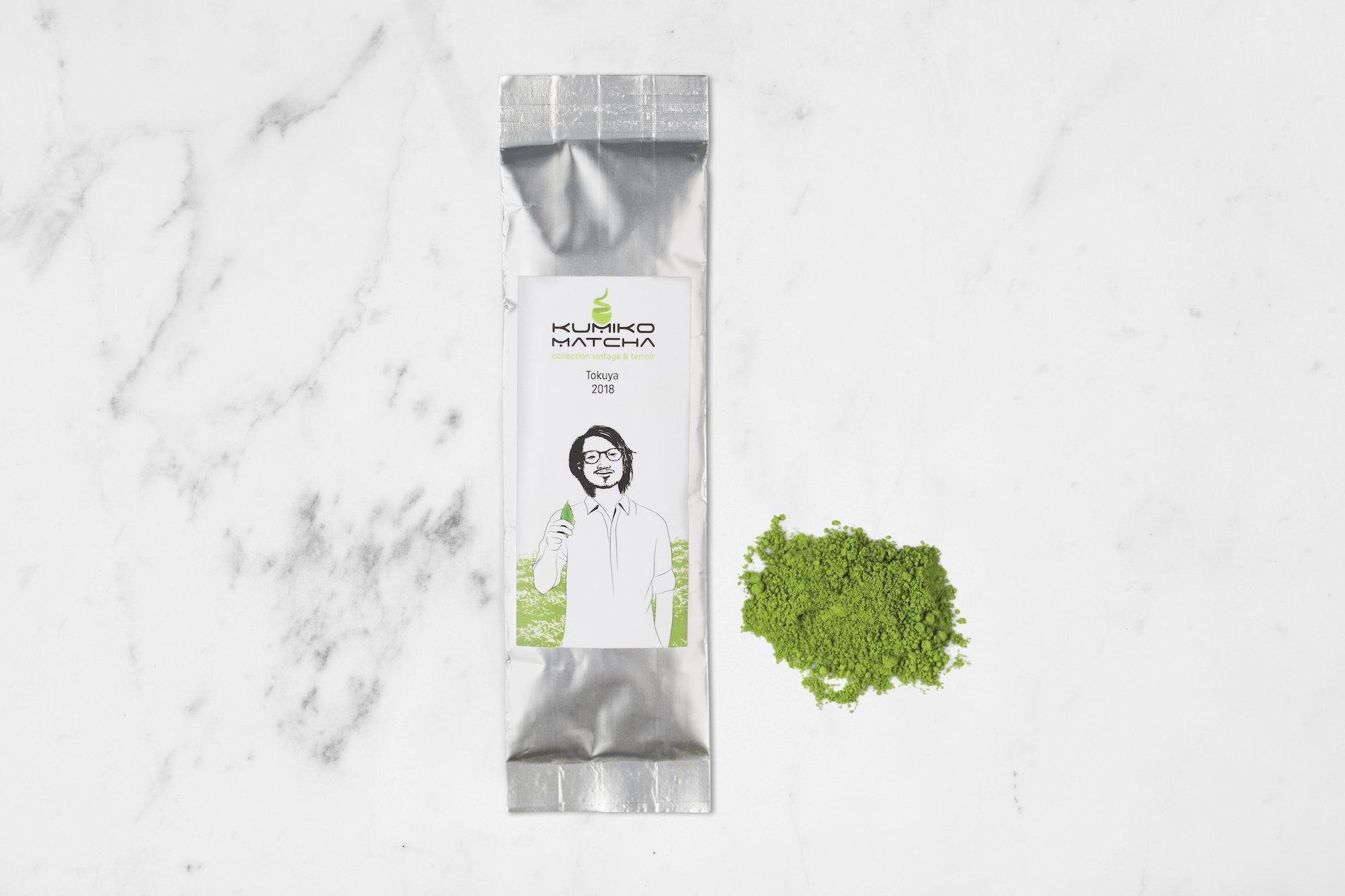
the natural Tokuya matcha 2018
A vintage matcha from the 2018 harvest that comes from Tokuya-san's fields in the Kyoto region.
Tokuya-san's tencha was dry-aged for almost two years before being freshly ground in February 2020. It evolved like a good wine: it has become rounder, and its taste and aroma have become more complex.
This matcha is also a zairai, which is extremely rare for matcha tea.
This natural matcha is comparable to a natural wine: more artisanal, more tannic, with more character.
Conclusion
We have looked together at what a cultivar, a single origin, and a blend are.
The world of matcha tea is as complex as that of wine, with vintage special editions that change every year depending on the conditions of their terroir; and with blends, mixes whose secret is kept by their creators.

It is an honor and a pleasure for me to introduce you to these subtleties and to share my passion for matcha tea with you. My mission is also to help you discover premium and organic matcha tea from Japan, so I invite you to save this article and share it with wine and champagne enthusiasts 🍷🍾🍵😇
Thank you for your attention and your time, and thank you for being part of the community! 💚🍵
- Val from Kumiko Matcha


